Potty training without the stress
Puppies learn where to go through routine and reward, not scolding. A steady schedule, one spot outside, a cue word and slowly longer breaks will get you there.
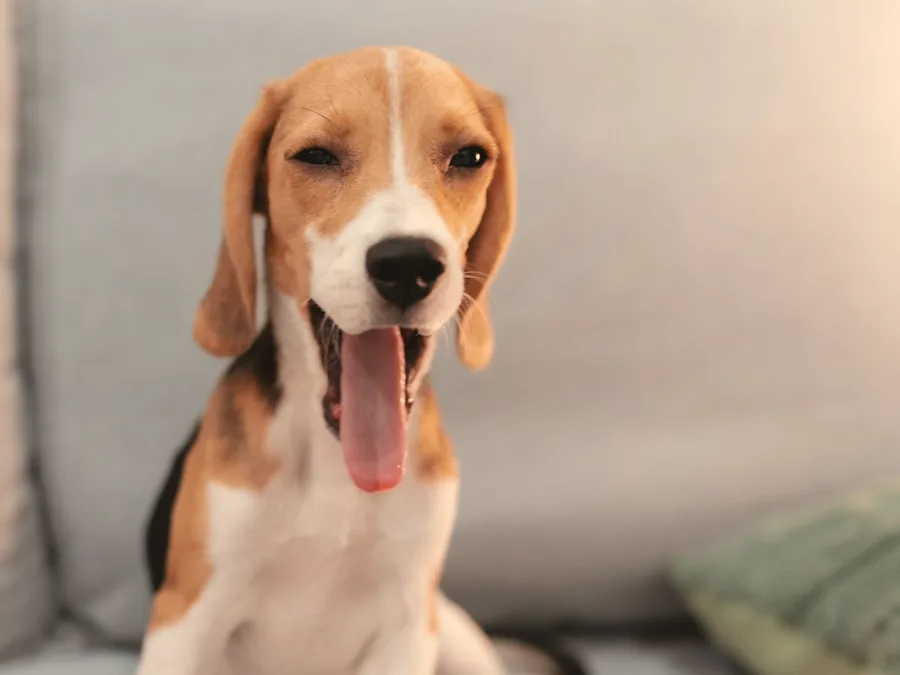
- Take your puppy out often: after waking up, after meals, after play and every hour or two in between.
- Go to the same spot, wait calmly and reward right there, the moment your puppy finishes.
- Add a cue word once the schedule works, then slowly lengthen the time between breaks.
- Clean accidents calmly and take the next break sooner. Never punish, it only teaches a puppy to hide.
How puppies learn where to go
A young puppy has a small bladder and little control over it. It does not yet know that the house is not the place, and it cannot hold on for long. Potty training is about two things at once: being outside at the right moments so your puppy gets it right, and making getting it right worth it.
Every success outside builds the habit of going there. Every accident indoors builds the habit of going indoors, which is why preventing accidents matters more than reacting to them. Most of the work is in your schedule, not in the puppy.
A potty training schedule
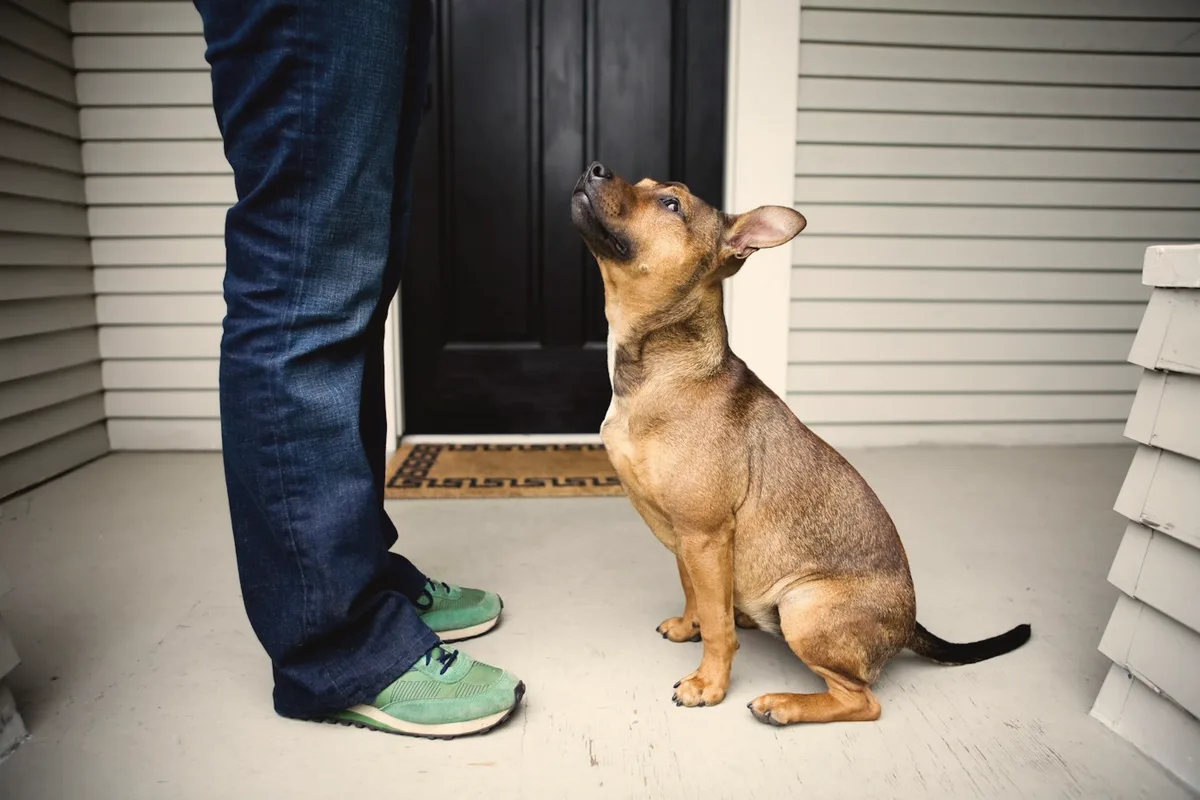
Puppies tend to need to go at predictable moments. If you take your puppy out at these times, most of the time it will go outside, and you will have a chance to reward it.
| When | Why |
|---|---|
| First thing in the morning | The bladder is full after the night |
| Right after waking from a nap | Puppies often need to go within minutes of waking |
| After meals and big drinks | Eating gets the gut moving |
| During and after play | Excitement and movement often trigger the need |
| Every one to two hours in between | A young puppy cannot hold on for long |
| Last thing before bed | A better chance of a dry night |
A common rule of thumb is that a puppy can hold on for roughly as many hours as its age in months, plus one, during the day. Treat that as a rough ceiling, not a target. Many puppies need to go more often, and it is always easier to go out a little too early than too late.
Feed meals at the same times each day. Regular meals make for regular breaks, which makes the whole schedule easier to predict.
How to potty train a puppy, step by step
- Pick one spot outside and go there every time, on a leash, so your puppy learns what that place is for.
- Stand quietly and let your puppy sniff. Do not play or chat yet; this is a business trip.
- Wait up to about five minutes. If nothing happens, go back in, keep a close eye on your puppy, and try again a little later.
- The moment your puppy finishes, praise it and give a treat right there, not when you are back inside.
- After a success, give a few minutes of play or a short walk, so going quickly does not end the fun.
- Keep a simple log of times and successes for the first days. Patterns show up quickly.
Success is easier than cleaning up.
Between breaks, watch for signs: sniffing the floor, circling, heading off to a corner, whining at the door or suddenly stopping play. When you see them, pick your puppy up or lead it out to the spot straight away.
Adding a cue word
Once your puppy goes reliably within a few minutes of arriving at its spot, add a short cue such as "Go potty" or "Be quick". Say it calmly just as your puppy starts to go, then reward when it finishes. After a while, the word itself starts the sniffing and searching.
A cue word is very useful later: before a car trip, on a rainy evening, or in a new place where your dog is not sure it is allowed. Keep it the same for everyone in the household.
Making the breaks longer
When your puppy stays clean between regular breaks for several days, stretch the gaps a little, by 15 to 30 minutes at a time. If accidents come back, return to the last gap that worked.
Over time, many puppies start to signal when they need to go, for example by going to the door or looking at you. Reward that, and respond quickly, so your puppy learns that asking works. A week without accidents between regular breaks, with a puppy that tells you when it needs to go, is a big milestone.
What to do about accidents
Accidents are part of potty training, even with a careful schedule. What you do next matters more than the accident itself.
- If you catch your puppy in the act, calmly interrupt with a neutral sound and take it outside to its spot. Reward if it finishes there.
- If you find an accident later, just clean it up. Your puppy cannot link a puddle from ten minutes ago to a telling-off now.
- Use an enzyme cleaner made for pet stains. Ordinary cleaners can leave a smell that draws the puppy back to the same place.
- Take the next break sooner. An accident usually means the gap was too long or a signal was missed.
Never punish, shout or rub a puppy's nose in it. It does not teach where to go; it teaches the puppy to hide from you when it needs to go. If accidents suddenly increase, your puppy goes very often or seems uncomfortable, see a vet, as it can be a sign of a health problem.
Crates, nights and pads
A crate your puppy likes can help with routine and rest, because most puppies try not to soil the place where they sleep. It must always be a calm, safe place and never a punishment. Build it up slowly: treats inside the crate with the door open, then the door closed for a moment while you stay close, then a few minutes while you move around the room or leave it.
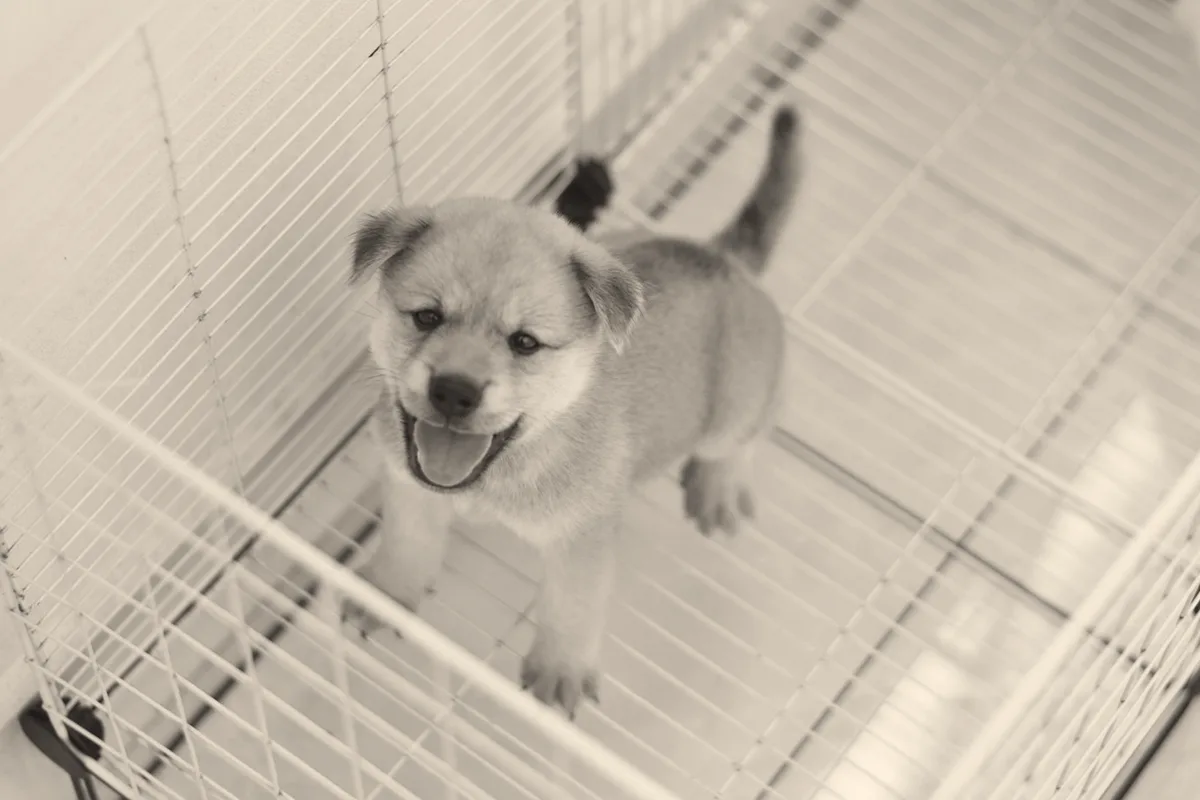
At night, keep the crate or bed close to you at first, so you hear your puppy stir. Young puppies often need one trip out during the night. Keep it quiet and boring: out to the spot, reward, straight back to bed.
Puppy pads can help if you live high up or are out for longer than your puppy can hold on, but they teach that going indoors is fine in one place. If your goal is outside only, use them as little as possible and move them towards the door over time.
If you are out for most of the day, ask someone to give your puppy a midday break. Leaving a young puppy alone for too long makes accidents almost certain.
Potty training with Lapka
- Add your puppy and its age. Lapka puts potty training and crate lessons into the daily plan.
- Follow the levels: a regular schedule, adding a cue word, then longer breaks, with reminders at the times you choose.
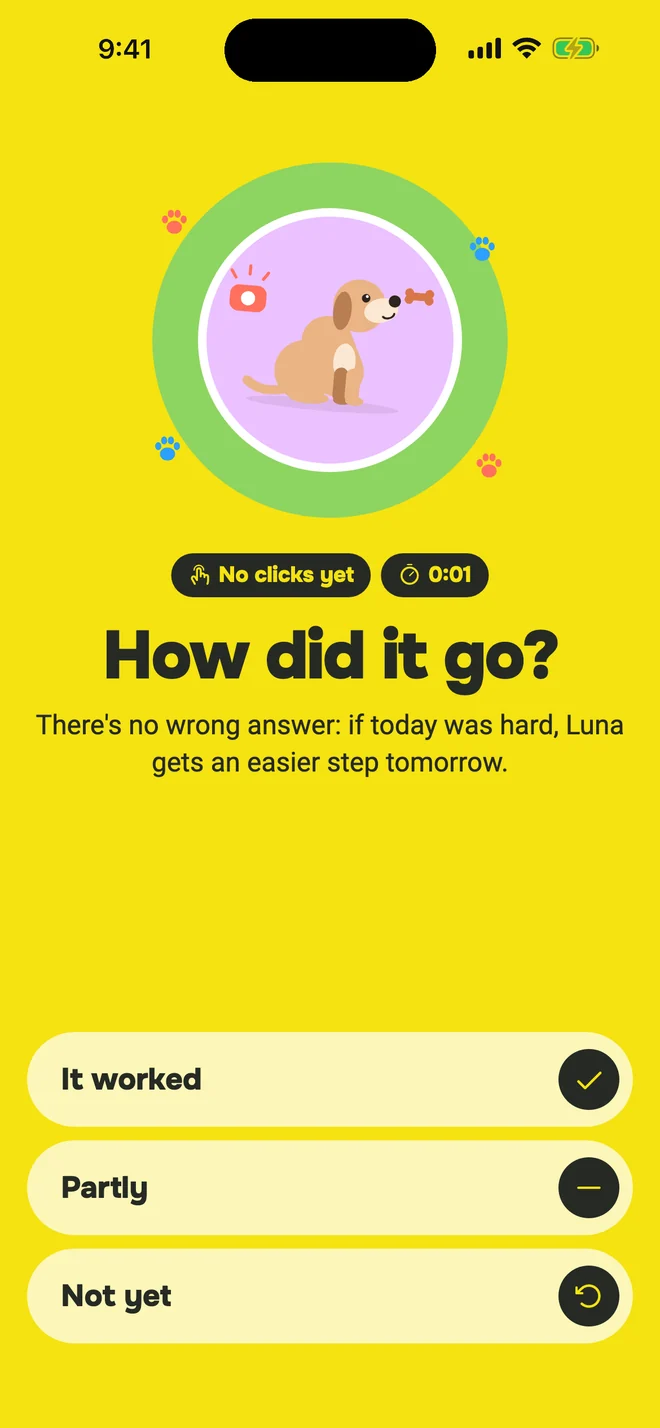
- After each lesson, say how it went. The plan moves on when your puppy is ready, and steps back if not.
Frequently asked questions
How long does potty training take?
Every puppy is different. Many get the idea within weeks, but full reliability can take several months. A steady schedule is what speeds it up.
How often should a puppy go out?
After sleeping, eating and playing, and every one to two hours in between for a young puppy. Lengthen the gaps slowly as it stays clean.
Does a crate help with potty training?
Yes, a crate your puppy likes can help with routine and rest. Introduce it slowly and never use it as a punishment.
Why does my puppy pee inside right after coming in?
It may have been too distracted outside. Wait a little longer at the spot, keep it boring, and reward right there when it goes.
Should I wake my puppy at night to go out?
Many young puppies need one night break. If yours wakes and stirs, take it out quietly. As it grows, it will hold on through the night.