Stop the pulling, enjoy the walk
A dog pulls because pulling works: it gets where it wants to go. Here is how to change that with rewards, a few minutes a day, first at home, then on quiet streets, then where it gets interesting.
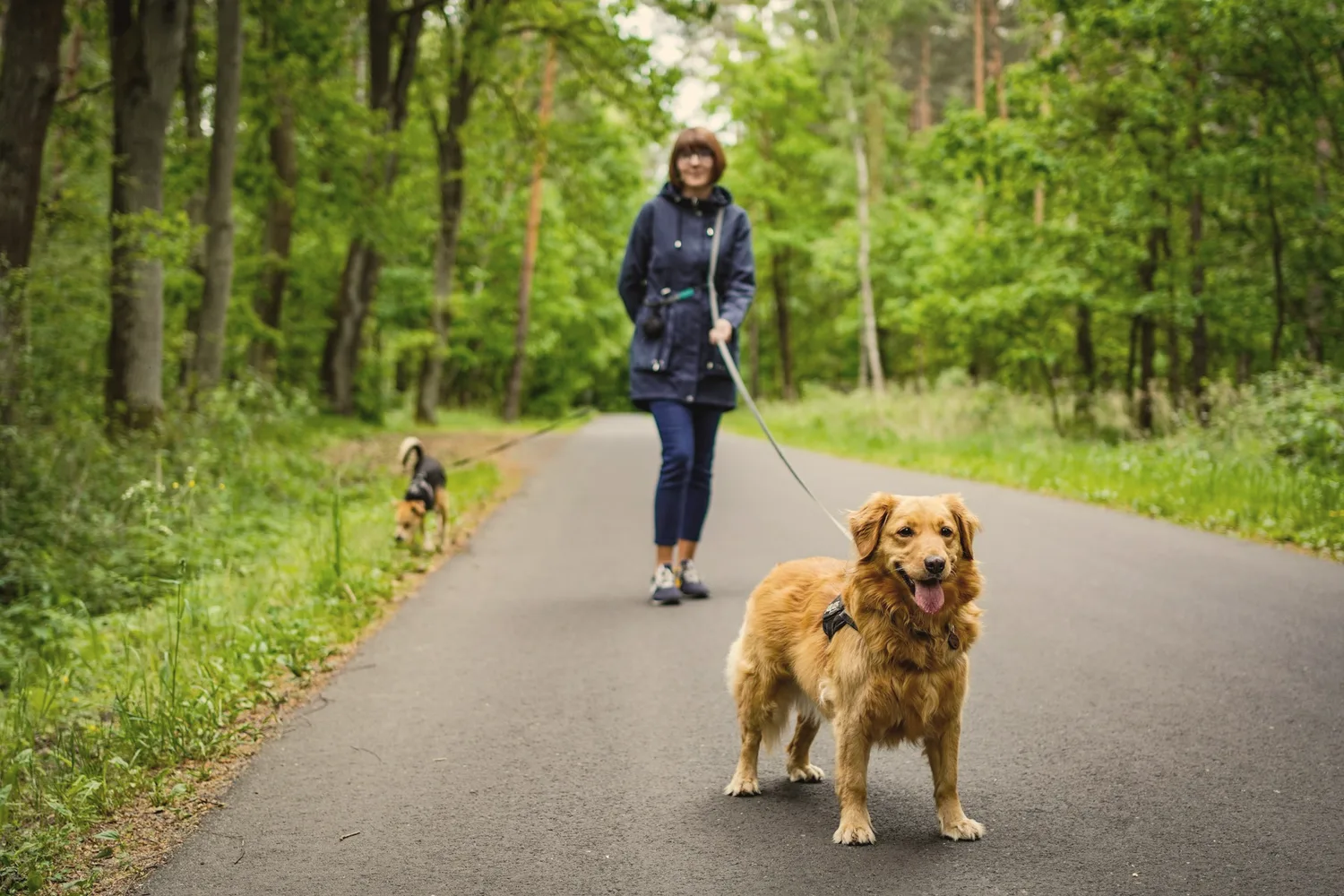
- Dogs pull because moving forward is the reward. Make a slack leash the only thing that gets you anywhere.
- Reward your dog right at your leg the moment the leash hangs loose, often at first, then less.
- When the leash goes tight, stop or turn the other way. Walk on only when it is slack again.
- Train in easy places first: at home, then a quiet street, then busier routes, a few minutes a day.
Why dogs pull on the leash
Dogs walk faster than we do, and the world outside is full of smells, people and other dogs. Pulling is not stubbornness or a bid for dominance. It is a simple lesson your dog learned on its own: when I lean into the leash, we move towards the interesting thing. Every walk where pulling gets results makes the habit a little stronger.
That is good news, because a learned habit can be replaced by another one. If walking next to you with a slack leash becomes the way to get forward, and pulling stops getting forward, the dog will choose the slack leash more and more often. Nothing in this plan needs force, leash jerks or special collars.
- Forward movement is the reward. Pulling pays off every time the walk continues while the leash is tight.
- Excitement makes it worse. A dog that has been inside all day leaves the door at full speed.
- The leash itself pulls back. Pressure on the neck or chest often makes a dog lean forward against it.
- Walking at our pace is not natural for dogs. It is a skill that has to be taught, like sit or come.
Harness or collar: what to use
You do not need special gear to teach a loose leash. A comfortable, well-fitted harness is a good start for many dogs, because it spreads pressure across the chest instead of the throat. A flat collar works too. The training is the same with either.
Pick a plain leash about 1.5 to 2 meters long. Retractable leashes teach the opposite of what you want: the dog learns that tension means more leash. Keep treats somewhere you can reach in a second, such as a pocket or a treat pouch on your left or right hip, the side your dog will walk on.
Avoid prong, choke and shock collars. They work through pain or fear, can injure the neck and tend to make a dog more anxious around the things it sees while it hurts. If your dog coughs, limps or suddenly does not want to walk, see a vet before you continue training.
If your dog is not used to a harness yet, let it sniff it, treat, and put it on for a few seconds at a time indoors before the first walk in it.
How to teach loose leash walking
Start where nothing competes with you: the living room or a hallway. Your dog wears its harness and leash, you have a handful of small, soft treats, and the session lasts two to five minutes. Stop while it is still fun.
- Choose a side and keep it. Your dog's spot is next to your leg on that side.
- Take one step. If the leash stays slack, mark with a clicker or a short word like "Yes" and give a treat right at your leg.
- Repeat with two steps, then three, then five. Always deliver the treat in the spot you want your dog to be.
- If the leash goes tight, stop. Stand still, say nothing, and wait for the leash to loosen.
- The moment it is slack, mark, treat at your leg and walk on. Moving forward again is part of the reward.
- End the session after a few minutes with an easy success, and try again later or tomorrow.
In the first sessions you will treat very often, maybe every step or two. That is normal. As your dog gets it, stretch the gap: every three steps, every five, every ten. A good first goal is ten steps in a row on a slack leash with your dog close to your leg.
Treat at your leg the moment the leash hangs loose. What gets rewarded comes back.
The U-turn: "Let's go"
Stopping works well for gentle pulling. For a dog that has locked on to something, a cheerful U-turn is often better. You say a cue such as "Let's go", turn and walk the other way, and reward your dog when it catches up next to you.
- At home, walk a few steps, say "Let's go" in a friendly voice and turn away.
- Mark and treat the moment your dog turns with you, before the leash tightens.
- Practise until your dog turns with you on the cue in about 8 out of 10 tries.
- Use it on quiet walks, then to walk away from a distraction such as a dog across the street.
The U-turn gives you something to do instead of holding on. It also teaches your dog to keep an eye on you, because you might change direction at any moment, and following you pays.

Taking it outside
Outside, everything is harder. Your dog has not forgotten what it learned; there is simply more going on. Lower the bar for a while: treat more often, walk shorter stretches and pick quiet routes and quiet times of day.
| Stage | Where | Goal before moving on |
|---|---|---|
| Reward the slack leash | At home | 10 steps on a slack leash, close to your leg |
| Slack leash on a quiet street | Quiet street | Half a block, slack at least 8 of every 10 steps |
| Slack leash with distractions | Normal walks | Past people and smells, slack 8 of every 10 steps |
| U-turn at home | At home | Turns on "Let's go" without a tight leash, 8 of 10 tries |
| U-turn on a walk | Quiet walk | Turns on the first cue, 4 of 5 tries |
| U-turn away from distractions | Busier walk | Turns away from a distraction, 4 of 5 tries |
Let your dog sniff, too. A walk is how a dog takes in its world, and sniffing is tiring in a good way. You can use it as a reward: after a stretch of slack leash, say "Go sniff" and let your dog explore for a moment. Then call it back to your side and carry on.
- Do something calm before a training walk, like a short sniffing game, so your dog is not bursting with energy at the door.
- Keep more distance from the things your dog finds hardest, such as other dogs or cyclists.
- On days you are in a hurry and cannot train, keep the walk short and calm, or use a different route, so pulling does not get rewarded on a long, exciting walk.
- Count. If the leash is slack less than most of the time, go back to an easier place for a few sessions.
From a loose leash to heel
A loose leash means your dog can be anywhere within the leash, as long as it is not pulling. Heel is more precise: your dog walks right beside your leg and follows your turns. You do not need it for everyday walks, but it is handy for crowded pavements, crossings and passing other dogs.
Teach heel the same way: start indoors by rewarding your dog for finding the spot next to your leg, then add a few steps and turns, then try it outside for short stretches past a person or a dog. Keep heel short and rewarding, and give your dog plenty of time on a normal loose leash in between.
How long it takes
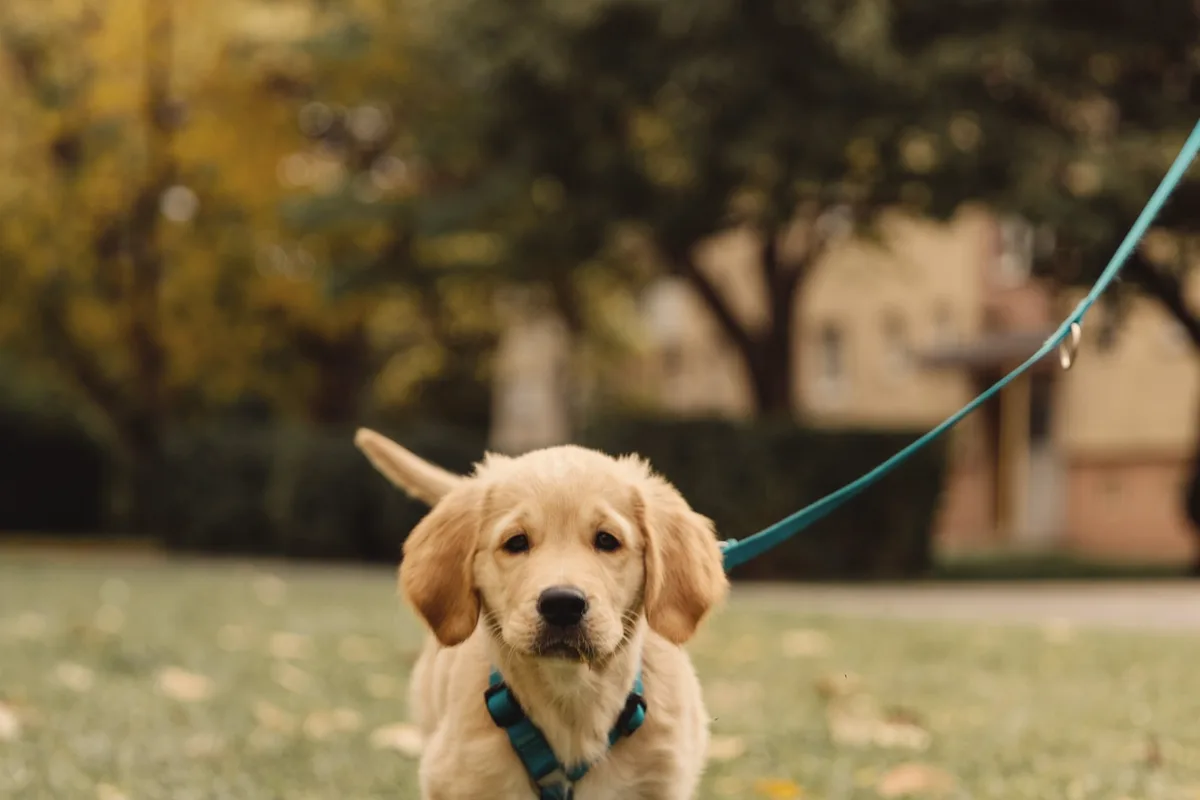
There is no fixed number of days. A puppy who has never pulled much may get it within a couple of weeks; an adult who has pulled for years will need longer, because the old habit has been rewarded so many times. What matters most is consistency: if pulling still works on some walks, it will keep coming back.
Short daily practice beats an occasional long session. Five focused minutes at the start of a walk, plus the rule that a tight leash means you stop, will do more than an hour of training once a week. Move to the next stage only when the current one works most of the time.
If progress stalls, check three things: the place may be too busy, the treats may not be good enough outside, or the session may be too long. Change one at a time.
Loose leash walking with Lapka
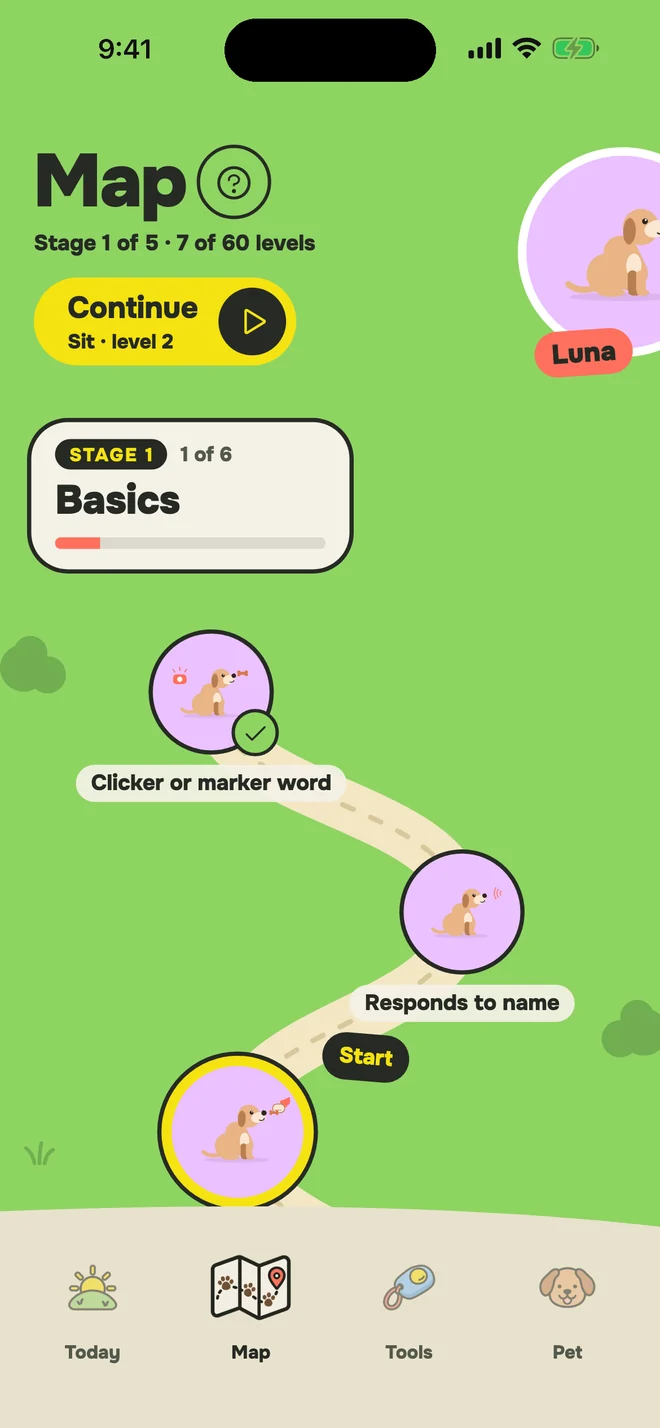
- Answer a few questions about your dog and pick pulling as something you want to fix.
- Follow short lessons on the skill path: loose leash, the "Let's go" U-turn and heel, each in three levels.
- Say how each lesson went. The next level opens when the last one worked, and a forgotten one comes back for a refresher.
Frequently asked questions
How long does it take to stop leash pulling?
It depends on the dog and how long it has pulled. With short daily practice and consistent rules, progress follows your dog's pace; there is no fixed timeline.
Should I use a harness or a collar?
A comfortable, well-fitted harness is a good start for many dogs. A flat collar works too. The training is the same with either.
Why does my dog walk nicely at home but pull outside?
There are far more distractions outside. Go back to quiet streets, treat more often, and add busier places step by step.
Is it okay to let my dog sniff on walks?
Yes. Sniffing is important for dogs. Use it as a reward after a stretch of loose leash walking.
Do no-pull collars help?
Prong, choke and shock collars stop pulling through discomfort or pain and can cause harm. Reward-based training teaches a lasting habit without them.