A calm puppy in a noisy world
What a puppy meets calmly early on, it takes in its stride later. The method is simple: start so small that nothing is scary, pair it with something good, and grow it slowly.
- Socialization means calm, pleasant first meetings with sounds, people, places, surfaces and being handled.
- Start very quietly or from a distance, pair each moment with a treat, and get closer or louder only while your puppy stays relaxed.
- Keep it to a few minutes a day and stop while it is still easy; never push a puppy through fear.
- The early months matter most, but adult dogs can get used to sounds and handling the same way, just more slowly.
What puppy socialization really means
Socialization is often understood as "meet as many dogs and people as possible". A better way to see it: your puppy learns that the ordinary things of its life are safe and predictable. Traffic, a doorbell, a stranger's hand, a slippery floor, a vacuum cleaner, a harness.
The key word is calm. A puppy that is overwhelmed at a busy market does not learn that markets are fine. It learns that markets are too much. Ten quiet, good experiences teach more than one big, loud one.
So the work is less about quantity and more about the dose. You choose how close, how loud and how long, and you watch your puppy's body to see whether the dose is right.
When to start socializing
Puppies are especially open to new experiences in their first few months, and this window is widely described as closing at around three months of age. That is why it is worth starting gently in the first days at home, rather than waiting until training feels serious.
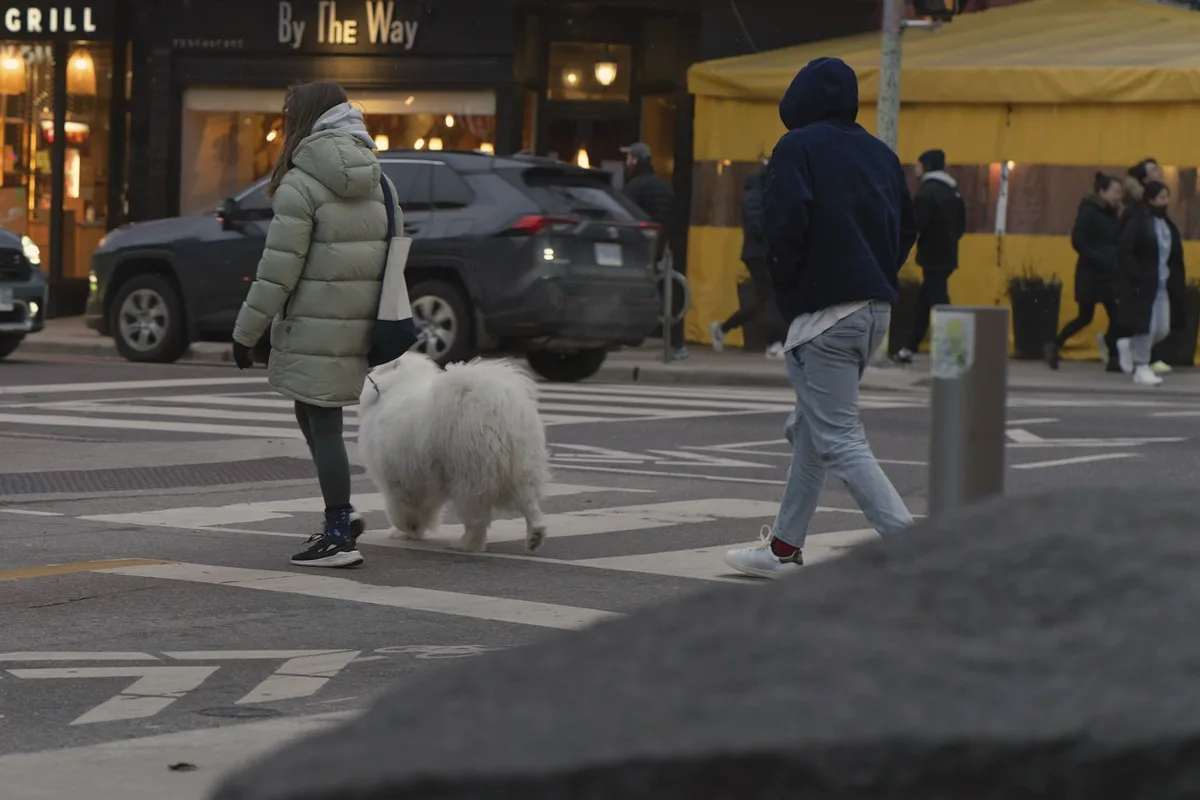
Vaccinations are a real concern before they are complete. Ask your vet which places are safe for your puppy now. A lot of socialization needs no contact with other dogs at all: sounds at home, being handled, a car ride, watching a street from your arms or from a doorway, new surfaces in your own flat.
If your puppy hides, trembles, refuses food or cannot settle after a new experience, take a big step back. If fear seems strong or keeps growing, talk to your vet and a qualified, positive-reinforcement trainer.
Getting a puppy used to sounds
Sounds are the easiest part to practise at home, because you control the volume. The idea is to play a recording so quietly that your puppy barely notices it, and to make that sound predict something good.
- Choose one sound, such as a doorbell, traffic or thunder, and play it at the lowest volume your puppy can just hear.
- Each time the sound plays, give a treat or start a short game. Sound first, then the good thing.
- Repeat five times. If your puppy stays relaxed and keeps eating, that volume is done.
- Next session, turn it up one small step. Stay at a level until your puppy is relaxed for five plays in a row.
- Work towards near-real volume over days or weeks. Aim for a puppy that looks to you instead of barking.
Signs that the volume is right: your puppy keeps eating, its body stays loose, it might glance at the speaker and then back at you. Signs that it is too loud: freezing, ears pinned back, tail tucked, refusing a treat it normally loves, running off. Turn it down and finish on an easy play.
Play sounds at random moments of the day, not only in "training time". Real doorbells and sirens do not wait for a session.
Fireworks and thunder
These are the sounds most dogs struggle with later, so they deserve early, patient practice long before the season comes. Use the same slow volume steps. Recordings do not have the flashes, the pressure changes or the smell of real fireworks, so on the real night also give your puppy a safe, quiet spot, close the curtains and stay close. If your dog panics during storms or fireworks, ask your vet for advice.
Handling for the vet and grooming
Every dog will have its paws, ears, mouth and body checked many times in its life. A puppy that has learned touch means treats makes vet visits, nail trims and brushing much easier for everyone.
- Touch one paw briefly, for a second, and give a treat. Then an ear, then the side of the mouth.
- Repeat until your puppy stays relaxed, or even leans in, for ten touches in a row.
- Make it longer: hold a paw for three seconds, look inside an ear, lift a lip to see the teeth.
- Let another calm person do the same, with you treating, until your puppy stays relaxed for five touches.
Keep handling short and leave your puppy a way out. If it pulls its paw away, you went too far; go back to a lighter touch. Over time, add the things a vet does: a hand on the chest, a gentle hold, a look at the belly.
A harness and leash without a fight
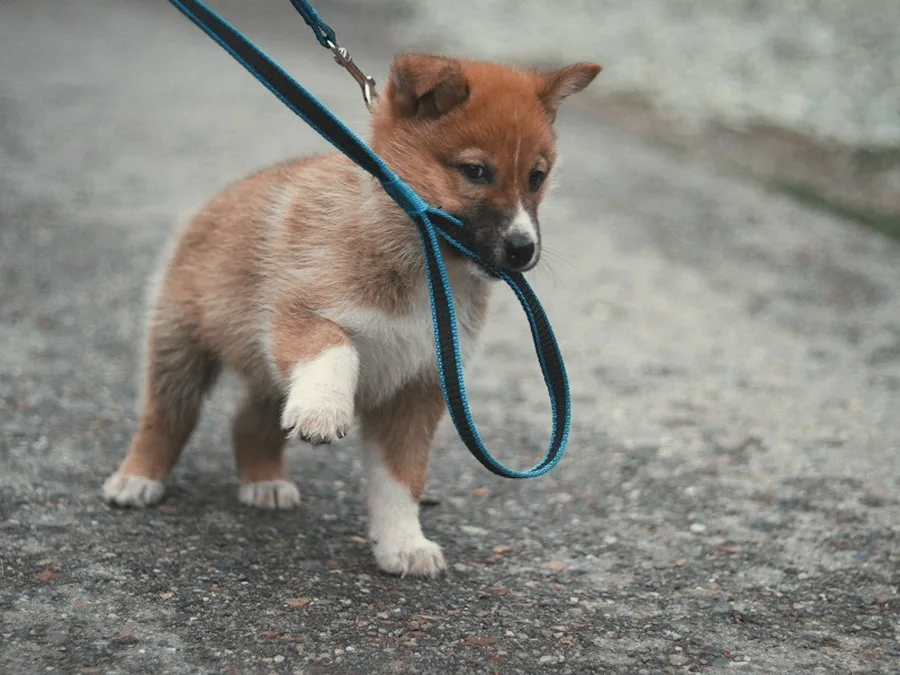
The first harness is a strange thing to wear. Make it a source of treats before it is a piece of equipment.
- Hold the harness open and let your puppy sniff it. Treat.
- Hold a treat on the far side of the neck opening, so the head goes through on its own. Treat again.
- Fasten it for a few seconds, treat, take it off. Then a little longer.
- Let your puppy wear harness and leash calmly at home for a few minutes, with play or a chew.
- Take the first short steps outside, aiming for three calm minutes without wriggling.
People, places and new surfaces
Beyond sounds and handling, think about what your dog's adult life will include, and introduce small, pleasant versions of it.
| Area | Examples to try gently |
|---|---|
| People | Hats, beards, umbrellas, children at a distance, people in uniforms |
| Places | A quiet street, a café terrace, a shop doorway, the car |
| Surfaces | Tiles, grass, metal grates, stairs, a wobbly cushion |
| Objects | A vacuum cleaner, a bicycle, a pushchair, a suitcase on wheels |
| Other animals | Calm adult dogs you know, cats seen from a distance |
Let your puppy choose to approach. A stranger does not need to pet your puppy for the meeting to count: watching calmly and getting a treat is a full success. Ask people to let the puppy come to them, and step in kindly if someone moves too fast.
Socializing an adult dog
Puppies learn fastest, but older dogs can get used to sounds and handling with the same method, usually more slowly. Rescue dogs in particular may need very small steps and a lot of patience. Start lower, stay longer at each level and keep sessions short.
Ten quiet, good experiences teach more than one big, loud one.
Socialization lessons in Lapka
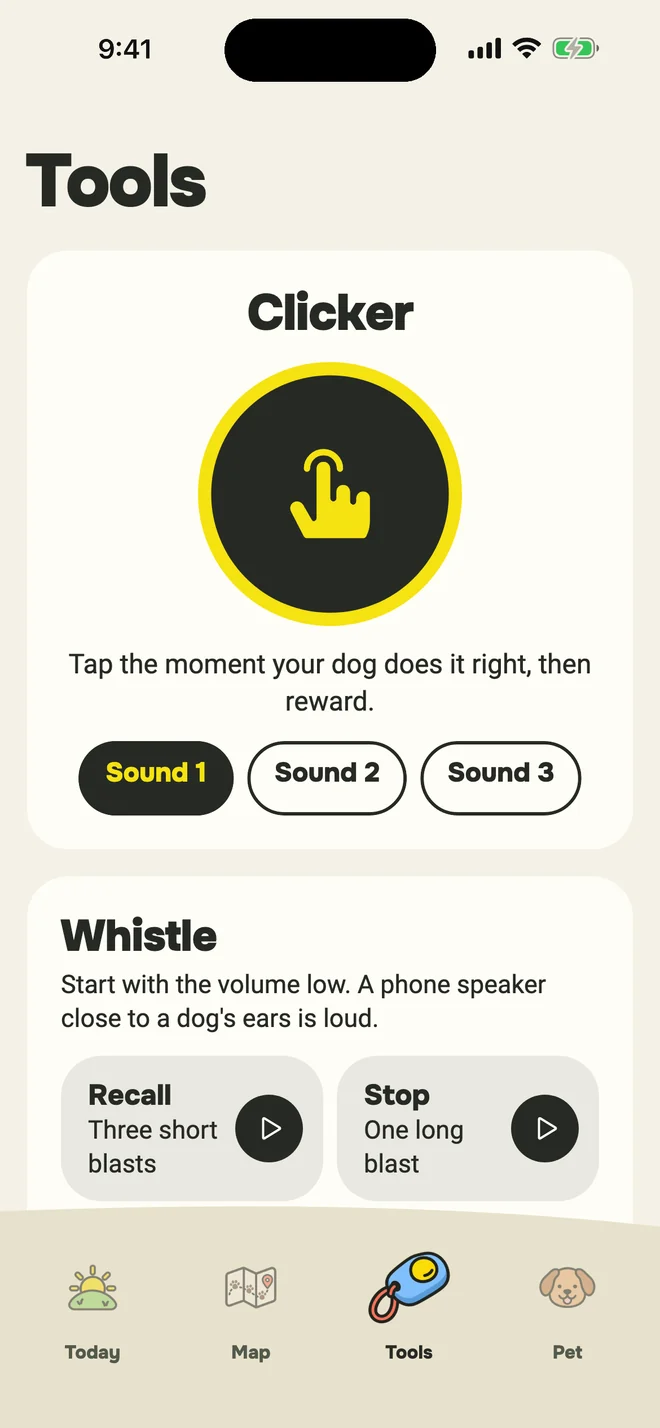
- Lapka has three short paths for this: getting used to sounds, handling for vet and grooming, and harness and leash.
- Ten everyday recordings, including fireworks, thunder, a doorbell, traffic, a siren and a crying baby, play very quietly first, then a little louder.
- After each lesson you say how it went, and the plan moves on, repeats the step or comes back to it later for a refresher.
Frequently asked questions
What is the best age to socialize a puppy?
As early as possible, gently, from the first days at home. The first three months or so are especially important.
Can I socialize my puppy before vaccinations?
Much of it, yes: sounds, handling and new surfaces at home. Ask your vet which outdoor places are safe.
How do I get my puppy used to fireworks?
Play a recording very quietly with treats, and raise the volume in small steps over days while your puppy stays relaxed.
Which sounds does Lapka have?
Ten everyday sounds, including fireworks, thunder, a doorbell, traffic, a siren and a crying baby.
Is it too late to socialize an adult dog?
No. Adult dogs can get used to sounds and handling the same way, just more slowly and in smaller steps.