Clicker training, or a word
A clicker tells your dog "that's it, a treat is coming" at the exact moment it does the right thing. A click and a short word both work, and the method is the same either way.
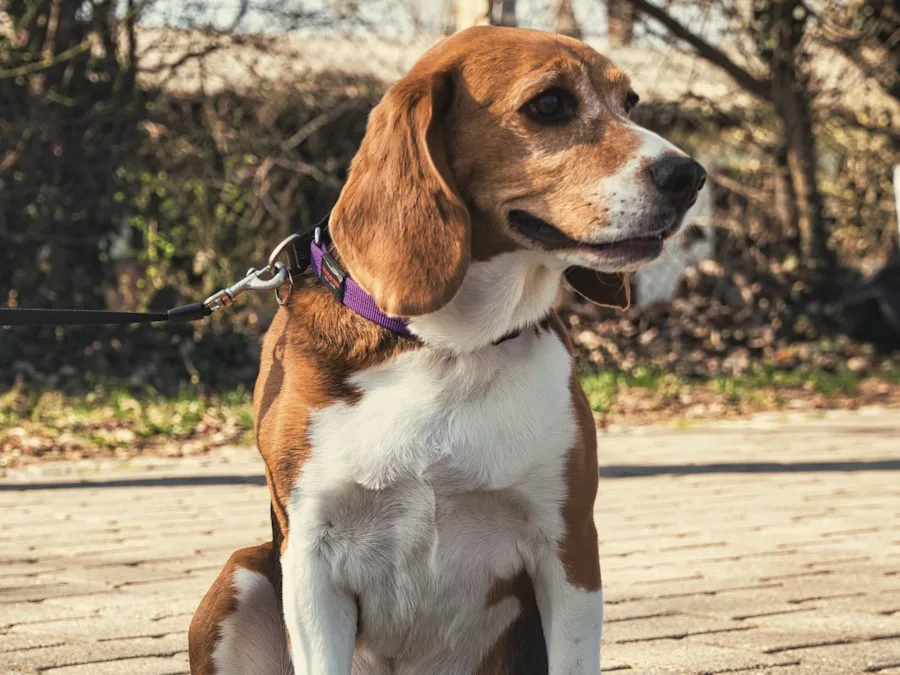
- A clicker is a marker: one short sound that means "that exact moment earned a treat".
- Charge it first: click, then treat, ten to twenty times in a quiet room, until your dog turns to you at the sound.
- Click during the behaviour, not after it, and follow every click with a treat.
- A word like "yes" works the same way; once a behaviour is learned you drop the marker and keep the cue.
What clicker training actually is
Clicker training is a way of teaching with positive reinforcement and a marker. The marker is a short, clear signal that tells your dog which moment you liked. The treat comes a second later, but the click has already said what it was for.
The problem it solves is timing. A dog sits for half a second and then stands up again. By the time your hand reaches the treat bag, the dog is standing, and the treat lands on standing. A click is fast enough to catch the sit itself, so the dog learns what you meant rather than what happened to be going on when the food arrived.
The clicker has no meaning on its own. It is a small plastic box that makes the same sound every time, which is exactly why it is useful: it never sounds annoyed, excited or tired, and it is not a word your dog hears all day in conversation. The meaning comes from pairing it with food, which is the first thing you do.
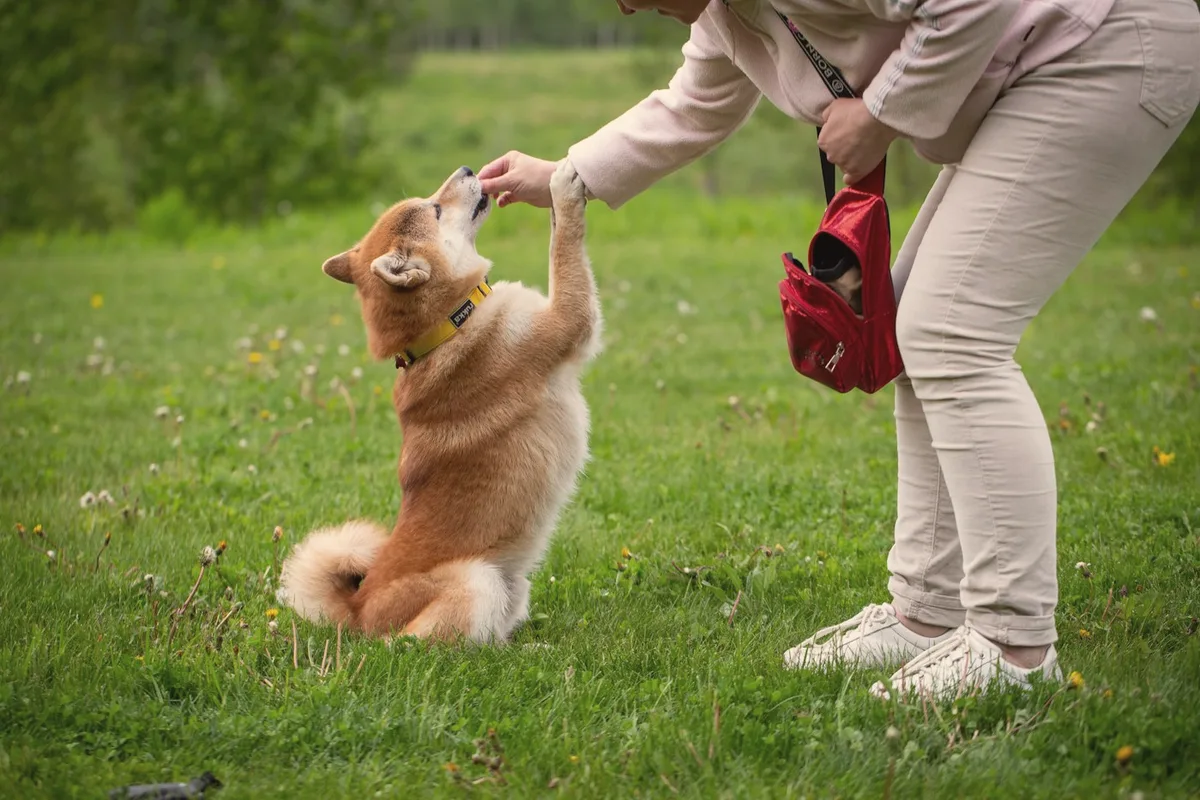
How to charge the clicker
Charging, sometimes called loading, means teaching your dog that the click predicts a treat. It takes a few minutes and you do not need your dog to do anything in particular yet.
- Pick a quiet room and have ten to twenty small, soft treats ready. Pea-sized is enough.
- Click once, then give a treat within a second or two. Your dog does not have to sit or look at you.
- Wait a few seconds, so the click does not become background noise, and repeat.
- Vary the moment: click while your dog sniffs the floor, looks away or walks off a little.
- Watch for the turn: when your dog snaps its head towards you at the click, expecting food, the marker is charged.
Many dogs get it within a session or two. A reasonable goal before you move on is that your dog turns to you expecting a treat in nine out of ten clicks. Then check it in another room, and later outside, where smells and noises compete for attention.
Keep the treat hand still until after the click. If food moves first, your dog learns to watch your hand instead of listening for the sound.
Some dogs are startled by the sharp sound. Click inside a pocket, use a softer clicker or switch to a marker word. If your dog seems generally fearful of sounds, go slowly and talk to your vet.
Timing: mark the moment
The click marks what is happening right now. Click while the behaviour happens: as the bottom touches the floor, as the nose touches your palm, as the leash goes slack. A click that comes a second late marks whatever came next, often getting up again.
Then reward. The treat can arrive a moment later and does not have to be delivered with perfect speed, because the click has already bridged the gap. What matters is that it comes every time.
Every click is a promise. Keep it, even if the click came a little early.
If you click by mistake, still give the treat. One wasted treat costs nothing, while a click that sometimes means food and sometimes means nothing quickly loses its value. The same goes for the other direction: do not click to get attention or to call your dog. The clicker marks; your dog's name and cues ask.
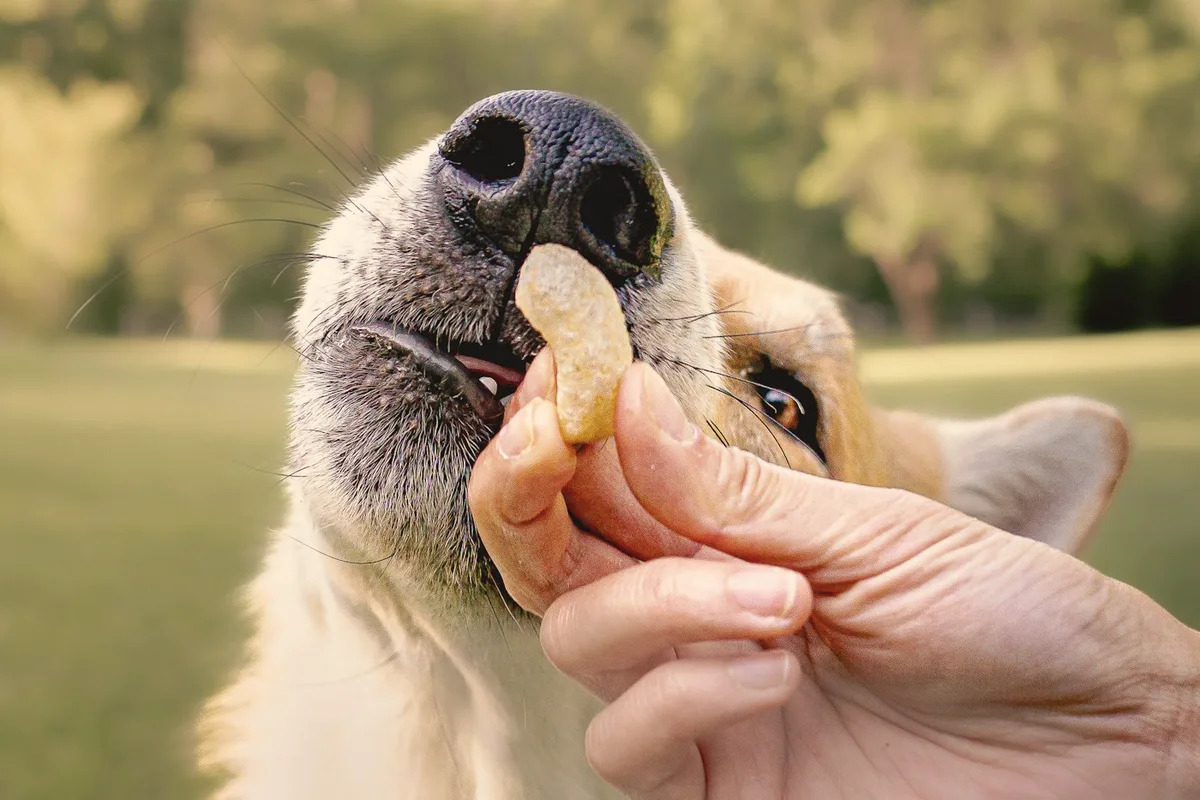
First things to teach with a clicker
Good first behaviours are short, easy to see and easy to click: a hand touch and a sit. Both teach your dog that its own actions make the click happen, which is the real lesson of clicker training.
Hand target
- Hold your open palm a few centimetres from your dog's nose. Most dogs sniff it out of curiosity.
- Click the moment the nose touches your palm, then treat from the other hand.
- Take the hand away and offer it again, a little to the left or right.
- When your dog bumps your palm within two seconds most of the time, add the word "Touch" just before you offer the hand.
- Move the hand a step away so your dog walks to reach it.
Sit
Hold a treat at your dog's nose and move it slowly up and back over the head. As the head goes up, the bottom usually goes down. Click as it touches the floor, then treat. After a few repetitions, do the same hand movement without food in it, click and reward from the other hand. Add "Sit" just before the movement once your dog sits reliably.
| Skill | Level 1 | Level 2 | Level 3 |
|---|---|---|---|
| Clicker | Turns to you at 9 of 10 clicks, quiet room | Turns within a second in any room | Turns at 4 of 5 clicks outside |
| Hand target | Nose to palm within 2 seconds, 8 of 10 | Walks a couple of steps to touch, toy nearby | Touches on the first cue outdoors, 4 of 5 |
| Sit | Sits within 2 seconds of cue and hand, 8 of 10 | Sits on first cue with a mild distraction | Sits on first cue outdoors, 4 of 5 |
The levels in the table follow one simple rule: make it easy and reliable first, then add one difficulty at a time. A new room, then a mild distraction, then the outdoors. If your dog fails twice in a row, go back to the last easy step for a few repetitions and finish there.
Clicker or a marker word
You do not need a plastic clicker to do clicker training. A short word works as a marker too, and many trainers use both: the clicker for teaching precise new things, the word for everyday moments when your hands are full.
- A clicker sounds the same every time; a word changes a little with your mood and voice.
- A click is very fast and precise, which helps when you teach a new behaviour.
- A word is always with you and leaves both hands free, which helps on walks and in daily life.
- Many people teach new things with the clicker and use the word for skills the dog already knows.
If you choose a word, pick one you do not use in normal speech all day. "Yes" is the classic choice; some people prefer a short, unusual sound. Say it in the same neutral tone every time and charge it exactly like a clicker: word, then treat, until your dog turns at the sound.
Use the marker only for teaching. Saying "good dog" while you pet your dog is fine, but keep that separate from the marker so the marker stays sharp.
Common clicker mistakes
- Clicking without a treat. The click soon becomes just a noise.
- Clicking too late. You end up rewarding the moment after the behaviour.
- Clicking several times for one behaviour. One click, one treat, every time.
- Holding the clicker in front of the dog's face. Keep it at your side or in a pocket.
- Sessions that are too long. Two to five minutes, then stop while your dog still wants more.
- Using the click as a recall or an attention noise. Call with the name or a cue instead.
Treats matter more than people expect. Use small, soft pieces your dog can swallow quickly, so the session keeps moving. Count them as part of the daily food, especially for small dogs and puppies.
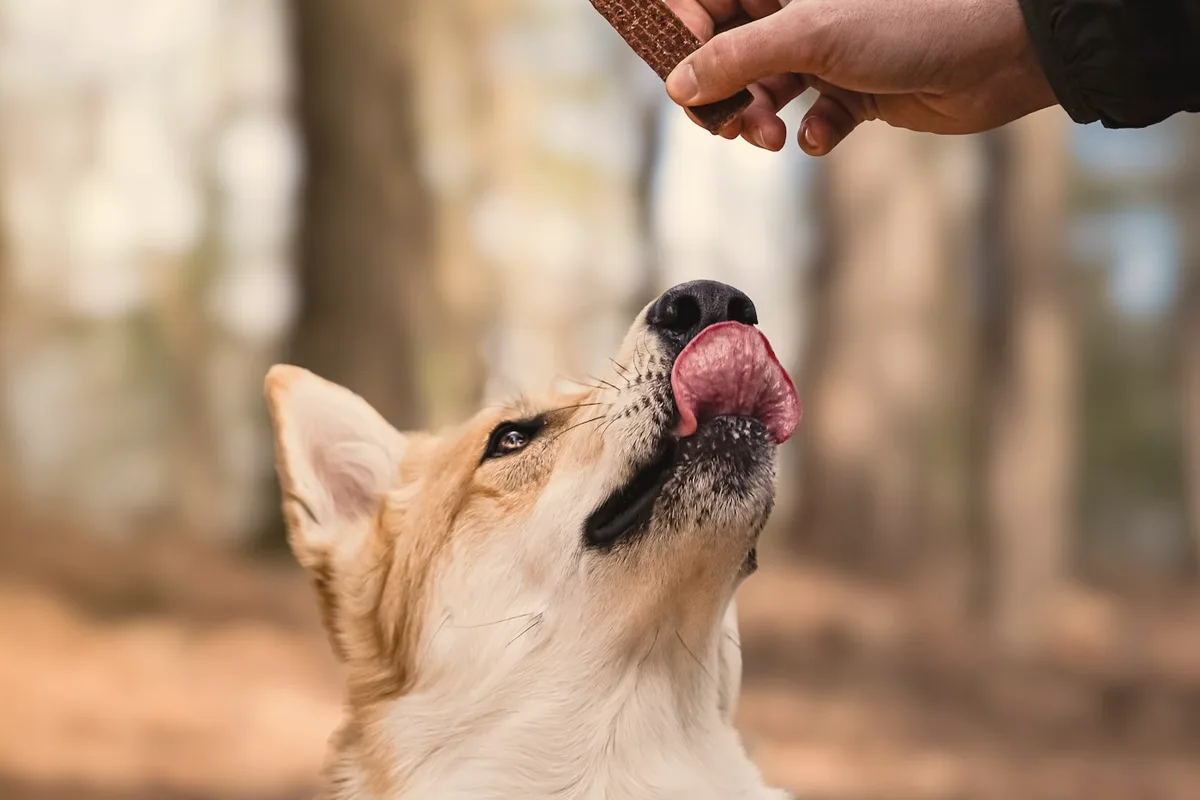
When to stop clicking
The clicker is for teaching, not for life. Once your dog sits on the first cue in different places, you no longer need to mark every sit. Keep the cue, praise, and give a treat now and then, sometimes for the quickest or neatest responses.
Bring the clicker back whenever you teach something new or want to polish a detail: a faster recall, a straighter sit, a calmer greeting. Your dog will remember what it means, and you will find that new skills come faster with a dog that already knows the game.
Clicker training works at any age. Puppies pick it up quickly, and older dogs often enjoy it because it gives them a clear, calm way to earn rewards without any pressure.
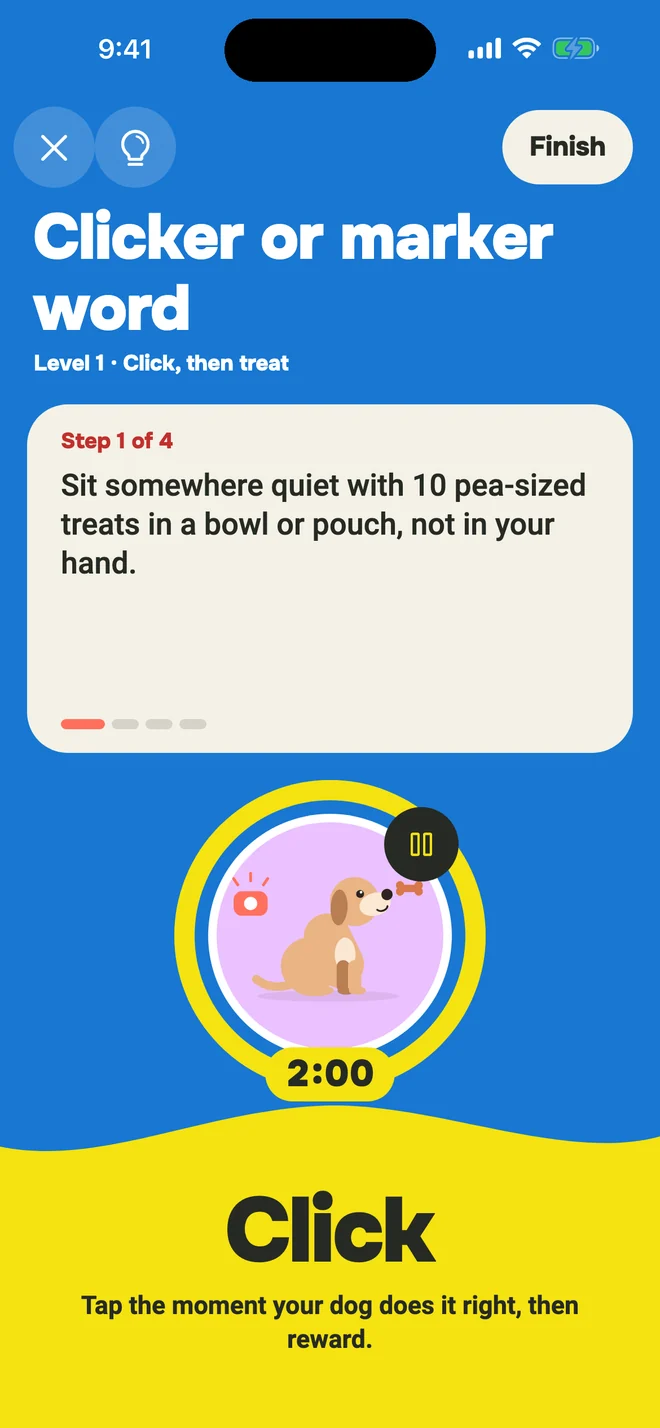
A clicker on every lesson screen in Lapka
- Tell Lapka a little about your dog, and the daily plan suggests short lessons, including charging the clicker, hand target and sit.
- Use the big clicker on the lesson screen or in Tools, or your own clicker or marker word: then the button simply counts repetitions.
- Say how the lesson went, and Lapka opens the next level, repeats this one or brings a forgotten skill back for a refresher.
Frequently asked questions
Do I need a real clicker?
No. A marker word like "yes" works the same way. Lapka also has a clicker on the lesson screen and in Tools.
How long does it take to charge a clicker?
Often one or two short sessions of ten to twenty clicks and treats, until your dog turns to you at the sound.
Can I stop clicking later?
Yes. Once a behaviour is learned, keep the cue and reward now and then. The marker is for teaching new things.
What if my dog is scared of the click?
Muffle it in a pocket, use a softer clicker or switch to a marker word. If your dog is fearful of many sounds, talk to your vet.
Is clicker training good for puppies?
Yes. Puppies learn the click quickly. Keep sessions to a few minutes and use tiny treats.
Can I clicker train an older dog?
Yes. Adult and senior dogs learn it too. Choose easy behaviours and keep sessions short and comfortable.