A puppy plan that fits your day
Puppies learn in short bursts. A few minutes a day, a few clear skills and the same rules for everyone at home will take you further than long weekend sessions.
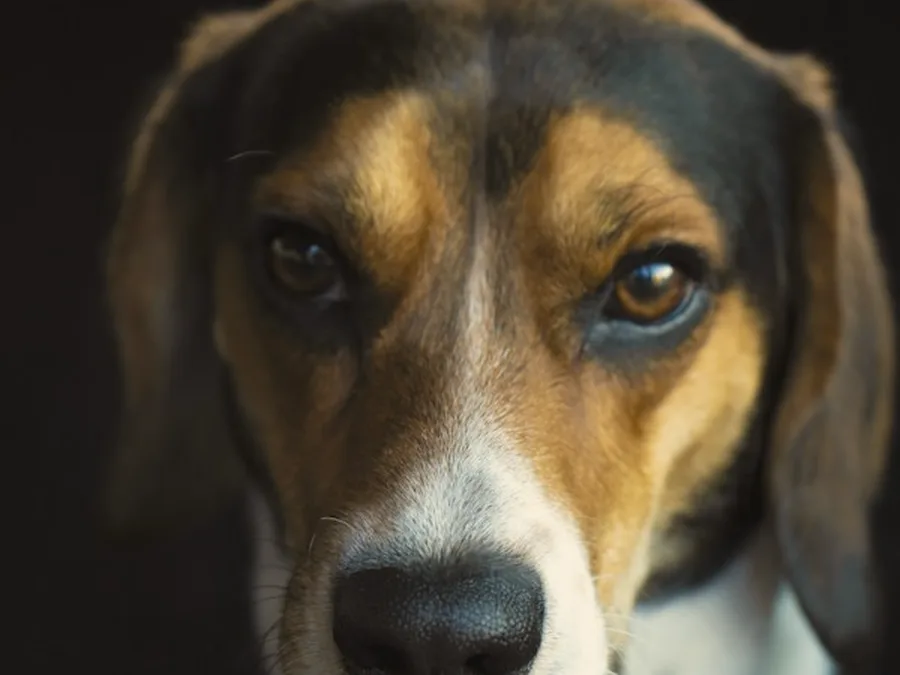
- Start in the first days at home with one to three sessions a day, two to five minutes each.
- Teach four basics first: responding to its name, sit, a gentle mouth and settling on a mat.
- Reward what you want instead of saying "no", and stop each session while it is still fun.
- Make it harder one step at a time: first at home, then with mild distractions, then outside.
When to start training a puppy
You can start in the first days at home. Not with drills, but with very short, gentle lessons that feel like play: say the name and give a treat, reward a sit that happens on its own, swap a hand for a toy. A young puppy's attention lasts only a little while, so the sessions should too.
What matters most at the start is that training feels safe and rewarding. Use positive reinforcement only: treats, play and praise for the behaviour you want. No jerks, no shouting and no physical corrections. A puppy that enjoys training will offer more and learn faster.
How long a session should be
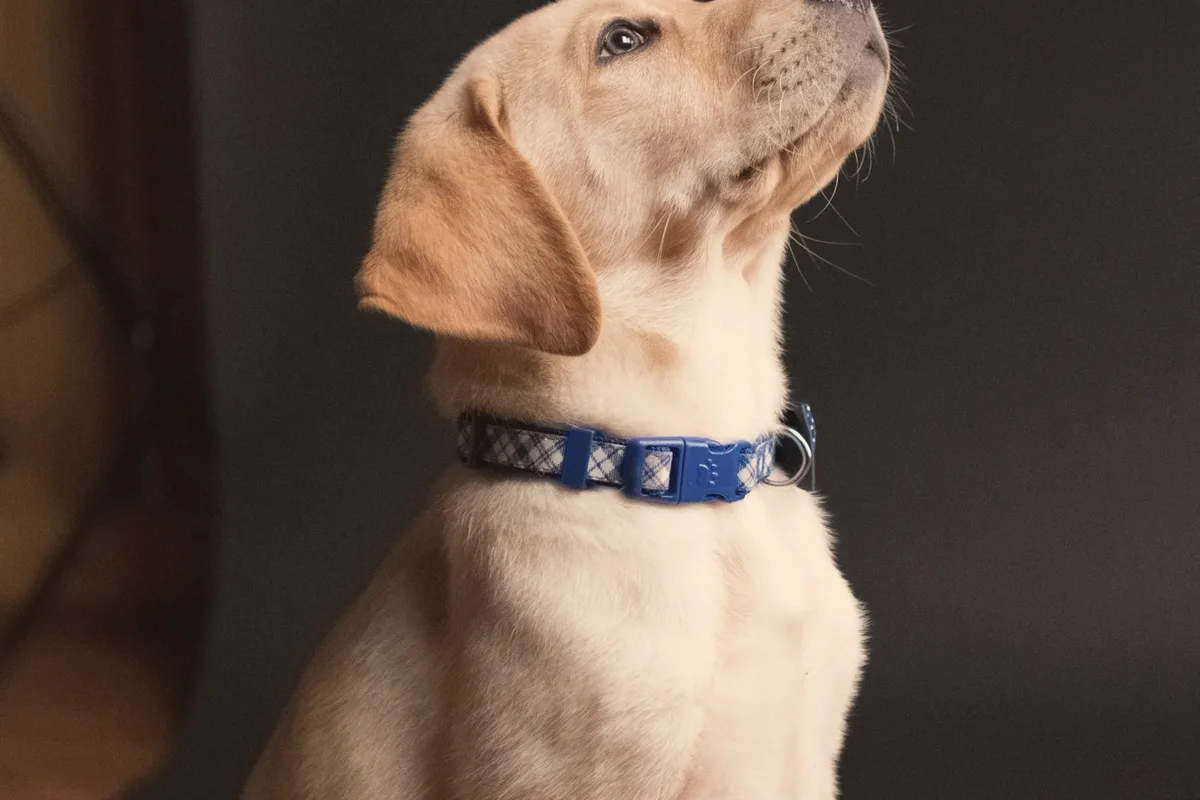
Two to five minutes is enough. Several short sessions spread across the day beat one long one, because a puppy that gets tired or bored starts making mistakes, and the session ends on a low note.
A simple rhythm: one session in the morning, one around midday or after a nap, one in the evening. Each one covers one skill, maybe two. Finish while your puppy still wants more.
| Time | Session | Length |
|---|---|---|
| Morning | Name game, then a few sits | 3 minutes |
| Midday | Gentle mouth during play | 2 minutes |
| Evening | Settle on a mat while you sit nearby | 5 minutes |
Train before meals rather than right after, and use part of the daily food as rewards. Small, soft pieces keep the session moving.
What to teach a puppy first
Four skills make daily life easier straight away and are the base for everything later: a name that means "look at me", a sit, a soft mouth and the ability to relax on a mat.
1. Responds to its name
- In a quiet room, say your puppy's name once in a happy voice.
- The moment it turns its head to you, mark it with a click or "yes" and give a treat.
- Repeat a few times a day until it turns within a second in nine out of ten tries.
- Then try it while something mildly interesting is going on, and later outdoors while your puppy sniffs.
Never use the name for something unpleasant. If the name sometimes means a bath or a telling-off, your puppy will start ignoring it.
2. Sit
Hold a treat at the nose and move it slowly up and back. As the head goes up, the bottom goes down. Mark the moment it touches the floor and reward. Fade the food from the luring hand, then add the word "Sit" just before the hand movement. Practise next to mild distractions, then outside with people or dogs at a comfortable distance.
3. Gentle mouth
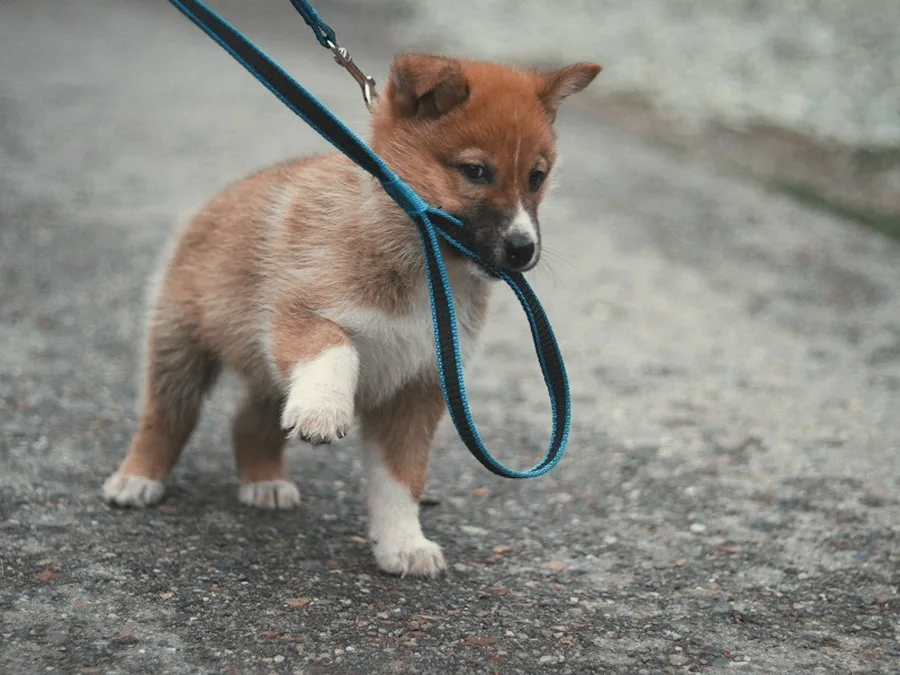
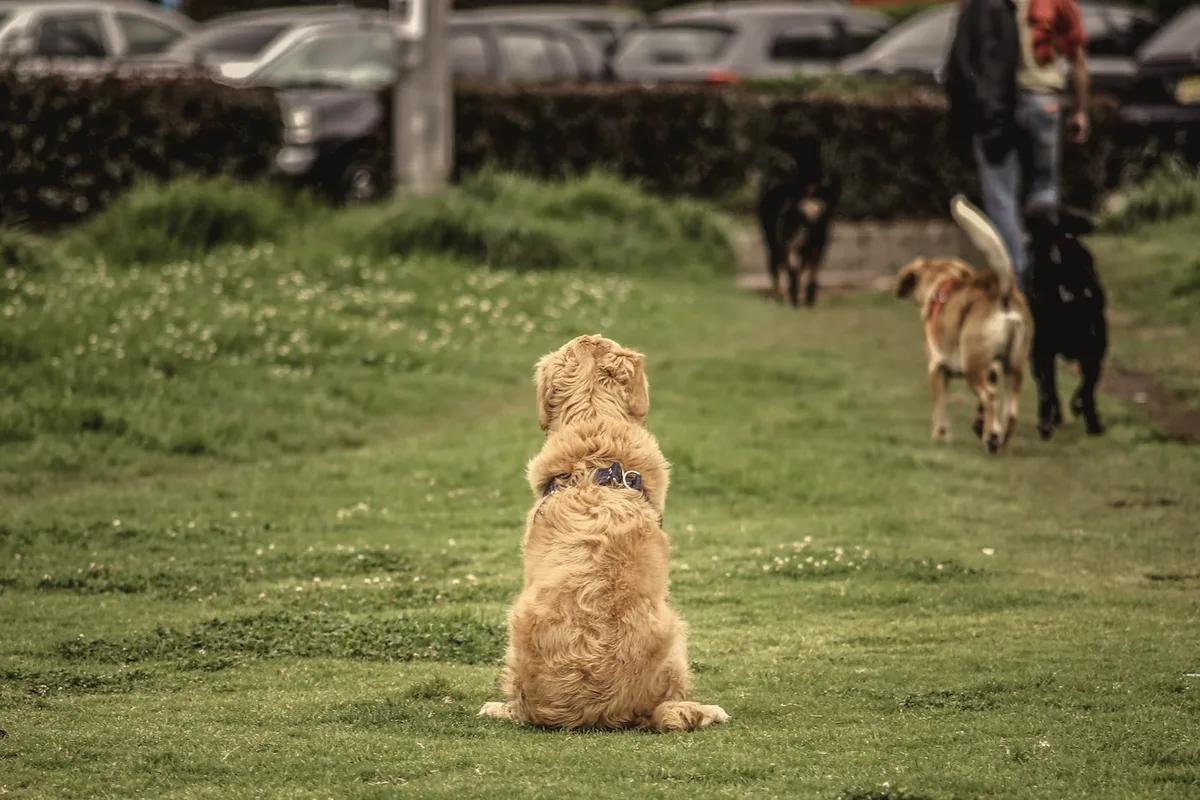
Mouthing is normal for puppies. They explore with their teeth, and they need to learn that hands are not toys. Keep a toy in your hand during play and offer it whenever teeth come towards you. Reward the choice of the toy. When teeth do land on skin, pause the game for a few seconds, then restart calmly with the toy.
- Toys, not hands: your puppy picks the toy over your hands in most grabs during a two-minute game.
- Soft mouth: it takes treats from your fingers gently. Close your hand if it snatches, open it when it softens.
- Calm when excited: when play pauses, it calms down within a few seconds and keeps its teeth on the toy.
4. Settle on a mat
A puppy that can relax on its own mat is easier to live with, at home and in new places. Put a mat on the floor, sit nearby and quietly drop a treat on it whenever your puppy lies down or sighs and relaxes there. Do not ask for anything; reward the calm. Build up from a minute to a few minutes while normal home life goes on, and later take the mat with you to a friend's flat or a café.
Teach what to do instead of "no"
"No" tells a puppy what not to do but leaves it guessing about what to do instead. It is easier to reward the behaviour you want, so it grows. Four paws on the floor instead of jumping. A chew toy instead of a shoe. A sit at the door instead of rushing out.
Manage the rest while your puppy learns: put shoes away, use a baby gate, keep a toy within reach. Every mistake that does not happen is one less habit to undo.
Every mistake that does not happen is one less habit to undo.
Same words, same rules
If one person says "down" for lying down and another says it for getting off the sofa, your puppy cannot win. Agree as a household on a short list of cues and rules, and stick to them: which word means what, whether the puppy is allowed on the sofa, who feeds and when.
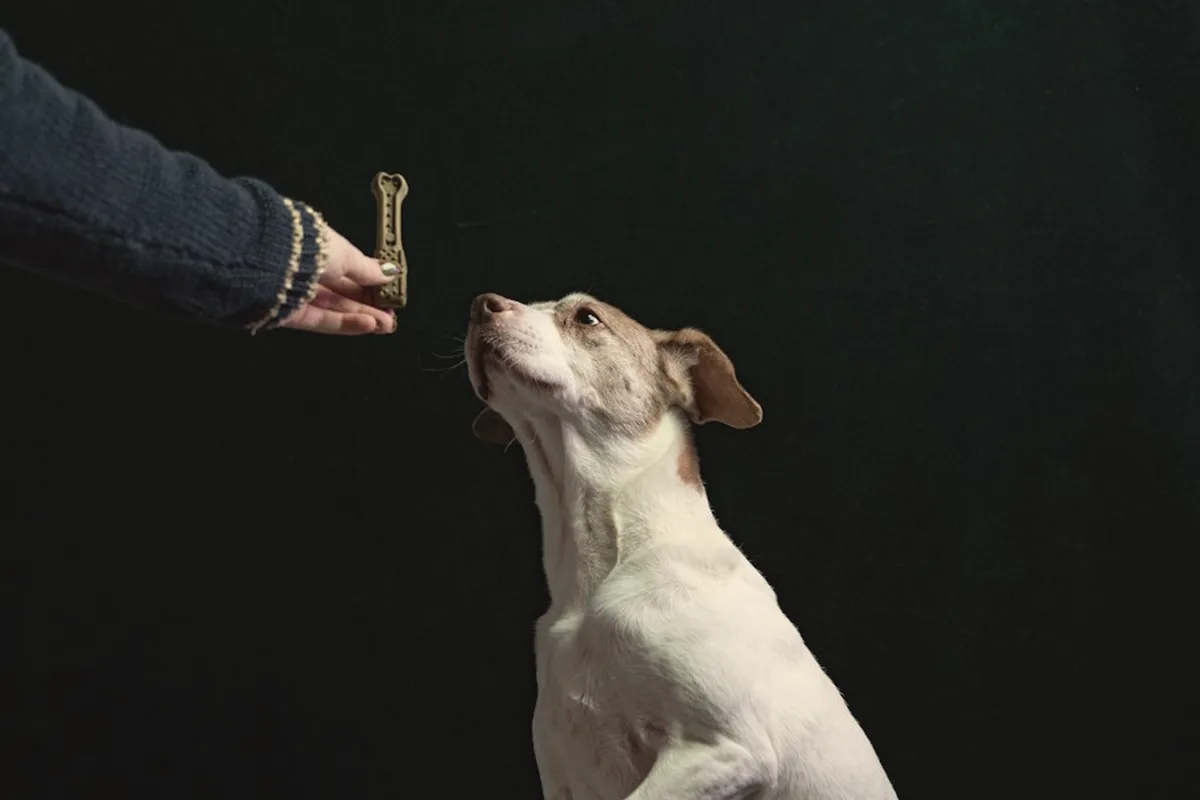
Children can join in with simple, safe tasks, such as saying the name and dropping a treat, with an adult nearby.
How to make progress week by week
Make one thing harder at a time. First the skill in a quiet room, then with a mild distraction, then in a new place, then outdoors. If your puppy fails twice in a row, go back to the last easy step and end the session there.
Revisit old skills now and then. A sit learned in week one fades if it is never asked for again, so a quick refresher keeps it fresh. And if your puppy already knows something, there is no need to repeat the beginner version: check it once and move on.
Training cannot fix pain or illness. If your puppy suddenly bites more, cries when touched, has accidents after being clean or seems unwell, see a vet first.
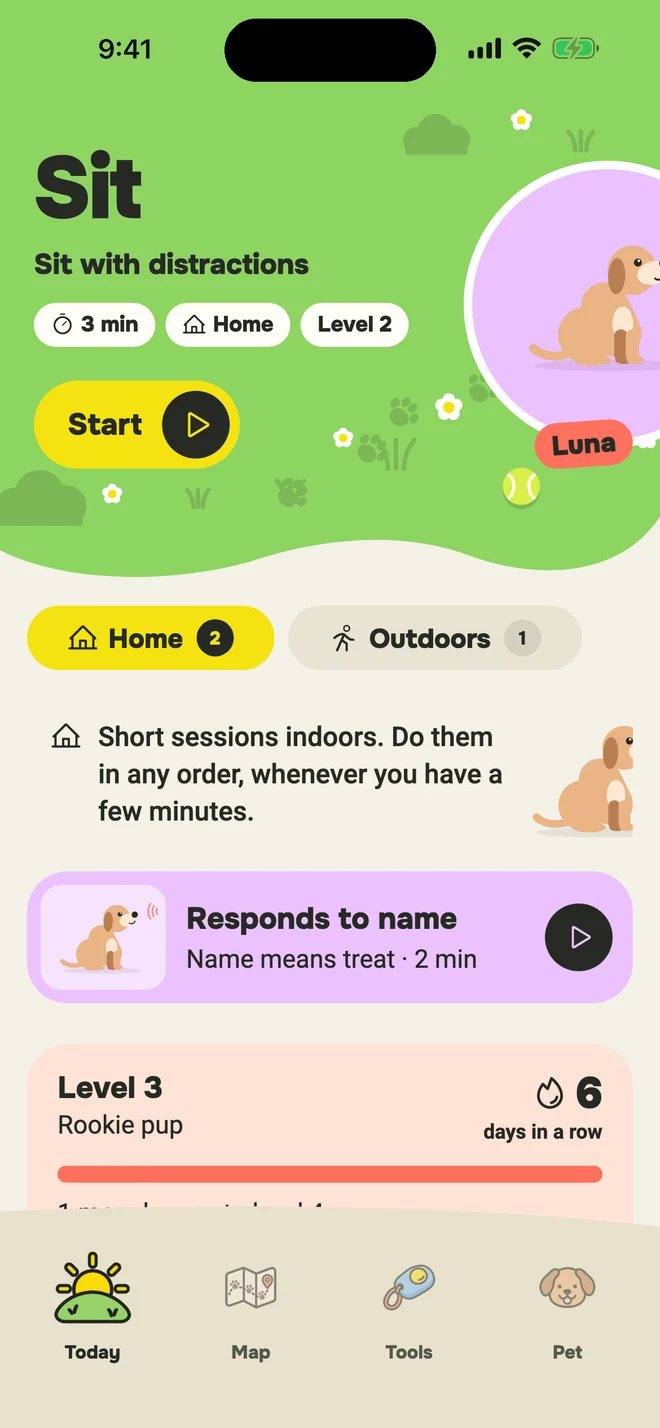
A daily puppy plan in Lapka
- Answer a few quick questions about your puppy, and Lapka builds a plan for its age, breed and what you want to fix first.
- Each day you get one to three short lessons with clear steps, a timer and a big clicker: name, sit, gentle mouth, settle and more.
- Say how each lesson went, and tomorrow's plan adapts: the next level opens, a tricky one repeats, a forgotten one comes back.
Frequently asked questions
When can I start training a puppy?
From the first days at home, with very short, gentle lessons of a few minutes.
How many minutes a day should I train my puppy?
One to three sessions of two to five minutes each is plenty for most puppies.
What should I teach my puppy first?
Its name, sit, a gentle mouth and settling on a mat. They make daily life easier and support everything else.
My puppy bites hands. What do I do?
Mouthing is normal. Offer a toy instead of hands, reward the choice and pause play briefly when teeth touch skin.
Should I say "no" to my puppy?
It helps more to reward what you want, like four paws on the floor, and to manage the space so mistakes do not happen.